


When you experience heavy periods, unpredictable mood shifts, stubborn weight retention, or debilitating PMS, it’s not hard to sense that something is off balance. Yet, so many individuals visit their doctors, run standard blood panels, and hear the frustrating words: “Your labs are completely normal.”
This disconnect between lived experience and clinical test results leaves many people feeling unheard and confused. So if your estrogen levels are technically within the normal range, how can you still experience all the classic signs of estrogen dominance?
The answer lies in how we view the human body. At hol+, we recognize that hormone health is about the system as a whole, not isolated numbers. More often, estrogen dominance is more about a ratio of imbalance than just simply having an excess of estrogen.
In systems-based medicine, the primary question we ask is not simply “Is estrogen high?” Instead, we ask, “Is hormone signaling balanced across your entire hormone system?” When we expand our view to see how the nervous system, gut, liver, and environment interact, we can finally understand the root of hormone imbalance and pave a clear path to balance and symptom resolution.
Explore our approach to hormone imbalance>>
What Is Estrogen Dominance?
To understand how you can be estrogen dominant with normal lab results, we first need to look at what this term actually means in clinical practice.
Relative vs. Absolute Estrogen Dominance
Absolute estrogen dominance occurs when your body produces excessively high levels of estrogen. This can happen, but it is actually quite rare.
Relative estrogen dominance is far more common. In this scenario, your total estrogen levels are completely normal, but progesterone levels are too low (1). And because progesterone is missing, the normal levels of estrogen act without any counterbalance, leading to symptoms of dominance.
Shop: Clinician-approved hormone support
The Estrogen–Progesterone Relationship
Think of estrogen and progesterone as partners in a delicate, beautifully choreographed dance. Estrogen is the hormone of growth, proliferation, and stimulation. It builds the uterine lining, boosts energy, and prepares the body for ovulation.
Progesterone, on the other hand, is the hormone of regulation, stabilization, and counterbalance. It calms the nervous system, maintains the uterine lining, and keeps estrogen’s growth-promoting tendencies in check (2). Healthy physiology relies on a dynamic balance between these two hormones. They function as a coordinated system. When one falters, the entire rhythm is disrupted.
Related: Is There A Link Between Low Progesterone & Anxiety?
Why Estrogen Dominance Can Occur Without High Estrogen
If your estrogen levels are fine, why are you experiencing an imbalance? The answer usually points to system-wide dysregulation. We’ll take a look at four core physiological reasons this happens.
1. Progesterone Deficiency
A lack of progesterone is often the primary driver of relative estrogen dominance (3). Your body primarily produces progesterone after ovulation. If you experience anovulation – a cycle where an egg is not released – you will not produce the progesterone needed for that month. Chronic stress, nutrient deficiencies, and intense physical exertion can suppress ovulation, and much easier than one might think (4). When this happens, estrogen’s effects become completely unopposed.
2. Chronic Stress and Hormone Signaling
When the body perceives a threat – whether from a looming deadline, a lack of sleep, or emotional strain – it prioritizes survival over reproduction. Stress shifts your body away from reproductive signaling, directly influencing your hormone balance and lowering your protective progesterone (5).
3. Impaired Estrogen Metabolism
Your liver is responsible for breaking down and clearing out hormones once they have done their job (6). This happens through specific detoxification pathways. If your liver is overburdened by environmental toxins, a poor diet, or a lack of essential nutrients, these pathways slow down (7,8). Poor clearance leads to functional estrogen excess at the tissue level, even if your ovaries are producing normal amounts.
4. Gut Health and Estrogen Recirculation
Your gut microbiome contains a specialized group of bacteria known as the estrobolome, which regulates estrogen metabolism (9). If your gut flora is imbalanced (dysbiosis), these bacteria can accidentally reactivate estrogen that your liver had already packed up for removal. The estrogen is then reabsorbed into your bloodstream. This recirculation is closely linked to bloating, constipation, and systemic inflammation.
Related: Common Hormone Problems That Actually Start in Your Gut
The Systems-Based Drivers of Hormone Imbalance
Hormone imbalance rarely exists in isolation. At hol+, we approach your health through an integrative lens, understanding that hormone disruption is a symptom of broader system-level health patterns.
Stress Physiology
Your hypothalamus-pituitary-adrenal (HPA) axis governs your body’s stress response. Continuous stress disrupts your natural cortisol rhythm, which in turn suppresses ovulation (10). Without ovulation, progesterone drops, and estrogen dominance takes hold.
Metabolic Health
Blood sugar instability and insulin resistance are deeply intertwined with hormone health. High insulin levels can cause the ovaries to produce excess androgens and disrupt the delicate balance of reproductive hormones (11). Furthermore, excess adipose (fat) tissue can actively produce and store estrogen, contributing to misaligned hormone signaling.
Liver Function
Your liver requires specific, nutrient-dependent pathways to safely metabolize hormones. If your liver lacks the antioxidants, amino acids, and B vitamins needed for this process, detoxification capacity plummets.
Gut Health and Environmental Load
A thriving gut microbiome ensures that metabolized estrogen leaves the body efficiently. When we pair gut support with a reduction in environmental load—minimizing exposure to endocrine-disrupting chemicals (xenoestrogens) found in plastics and personal care products—we significantly relieve the cumulative burden on your endocrine system.
Shop: Trusted Detox Essentials
Common Symptoms of Estrogen Dominance
Because estrogen dominance is a systems issue involving metabolism, detoxification, and signaling, the symptoms are widespread. Recognizing these patterns is a vital step in your healing journey. You may experience (12,13,14):
- Premenstrual syndrome (PMS), characterized by mood swings and irritability
- Breast tenderness and swelling
- Heavy, painful, or irregular periods
- Bloating and water retention
- Weight resistance, especially around the hips and thighs
- Brain fog and difficulty concentrating
- Persistent fatigue
- Low libido
These symptoms reflect the relative imbalance in your tissues, rather than a lab-defined excess of estrogen in your blood.
Learn: Testing for Hormone Imbalance
Why Standard Lab Testing May Miss It
Conventional care models often fall short when diagnosing hormone imbalances because they rely on limited data points (15). Serum estrogen levels may appear perfectly normal on a random Tuesday. However, progesterone is frequently not tested at the correct phase of the menstrual cycle, rendering the results meaningless.
Standard tests also lack a ratio-based interpretation. They rarely evaluate your cortisol rhythm, metabolic markers, or your gut and liver function alongside your reproductive hormones. Numbers without context can easily miss functional imbalances, leaving you without answers or support.
Take the Quiz: Are My Hormones Balanced?
The Root Cause Medicine Approach to Estrogen Dominance
Finding true healing requires a comprehensive, integrative health plan. Our approach merges the precise diagnostics of modern science with the wisdom of traditional holistic practices.
Structured Clinical Evaluation
A detailed menstrual and reproductive history provides the foundation of your care. We assess your stress levels, lifestyle habits, sleep quality, recovery patterns, and potential environmental exposures.
Advanced Diagnostics
To gain a complete picture of your multidimensional health, we may utilize advanced diagnostics. This may include:
- Progesterone timing and ratio analysis
- Comprehensive cortisol rhythm testing
- Metabolic markers like fasting insulin and glucose
- Liver function markers
- Gut function analysis
We use this data to understand system patterns, ensuring we treat your whole body.
Restoring Hormone Balance at the System Level
True healing involves strategic interventions that address the foundational pillars of health. We focus on gentle, effective methods that help your body to find its natural equilibrium.
Nervous System Regulation
Supporting your stress physiology is paramount. We integrate sleep optimization and practices that improve vagal tone, communicating safety to your body so it can prioritize healthy reproductive signaling (16).
Ovulation Support and Progesterone Restoration
We use targeted nutrient support, such as magnesium and B vitamins, alongside cycle-aware strategies to encourage regular ovulation. By addressing stress-related ovulatory disruption, we naturally restore your progesterone levels.
Metabolic Stabilization
Blood sugar regulation is a powerful tool for hormone balance. Through strategic protein and nutrient timing, we reduce insulin-driven hormone disruption, providing a stable foundation for your endocrine system.
Estrogen Metabolism and Environmental Support
We incorporate liver-supportive nutrients and specific fibers to aid in estrogen clearance and optimize your gut microbiome. Simultaneously, we guide you in minimizing endocrine disruptors in your daily life, actively supporting your body’s innate detoxification pathways. The goal is not to suppress estrogen, but to restore hormonal coherence.
Reclaiming Your Vibrant Health
Estrogen is not the enemy. The true root of the issue is imbalanced signaling, often driven by progesterone deficiency, unmanaged stress, and overburdened detoxification pathways. Your hormone health is a beautiful reflection of your metabolism, your nervous system regulation, and your body’s capacity to clear out what it no longer needs.
Want to learn more? Schedule a FREE 15 minute consultation
Schedule Your Consultation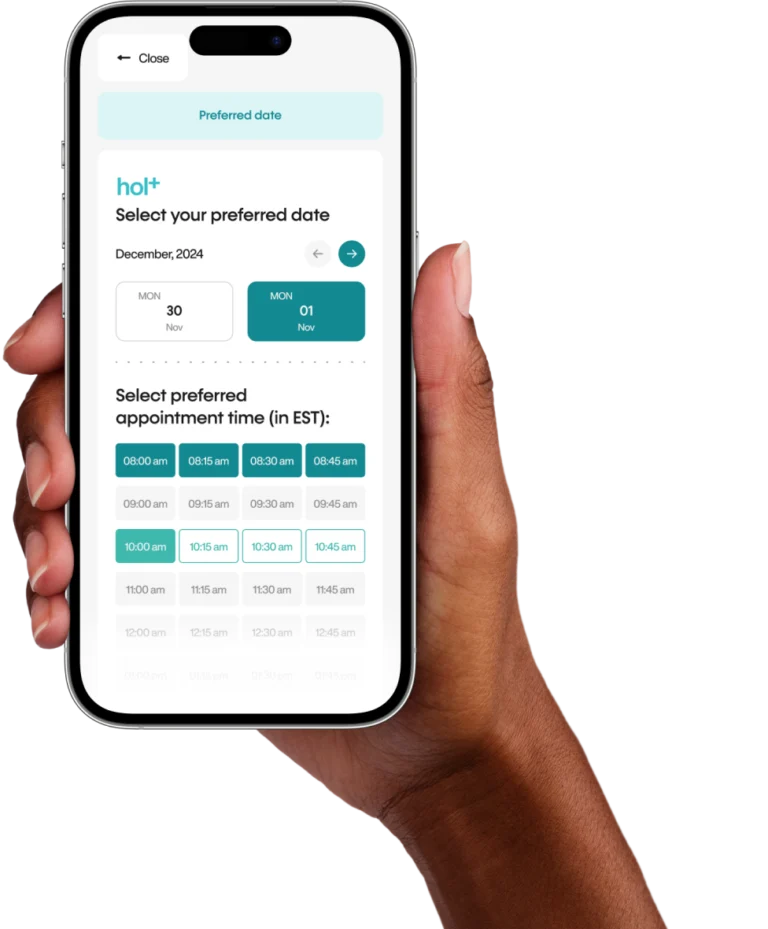
At hol+, we merge scientific research with traditional holistic care to ensure our strategies restore balance at the root, rather than just adjusting isolated lab values. You deserve to feel comfortable, energized, and vibrant in your body. By empowering leaning into a supportive, integrative approach, you can restore your health and experience true, lasting hormone harmony.