


Biocidin® is a botanical dietary supplement designed to support gastrointestinal health and microbial balance. Some holistic and functional medicine clinicians use this proprietary blend of plant extracts and essential oils within personalized gut-health plans.
Interest in Biocidin has grown among people looking for digestive health supplements. Published research is still developing, and recent studies offer early support for several proposed Biocidin benefits. This review explains what Biocidin is, the most common Biocidin uses, and how the available evidence can inform thoughtful use.
At hol+, symptoms, health history, medications, and testing help determine if Biocidin for gut health is appropriate for an individual patient.
What Is Biocidin?
Biocidin is a professional-grade formula made with 18 botanical extracts and essential oils. The manufacturer describes the Biocidin supplement as a broad-spectrum formula for gut microbiome support. At hol+, it is used within personalized care as a targeted form of digestive and microbial support.
“I think of Biocidin as a targeted gut-support tool.”
— Dr. Taz Bhatia
Origin and Development
Biocidin has been commercially available since 1989. It was developed around the idea that multiple botanicals could support microbial balance through complementary forms of activity. Its long-standing use has made it a familiar option in holistic and functional medicine, and recent research has begun to examine several of its proposed applications.
The manufacturer describes the formula as supporting digestive function and the body’s normal immune response. This reflects how many practitioners incorporate it into individualized gut and immune-health protocols.
Main Components
The Biocidin Botanical Blend contains bilberry and grape-seed extracts, shiitake mushroom, goldenseal, noni, garlic, white willow bark, milk thistle, two forms of echinacea, raspberry, black walnut, fumitory, and gentian. It also contains lavender, oregano, galbanum, and tea-tree oils. Vegetable glycerin forms the base, with sugar-cane-derived ethanol listed as another ingredient.
Several ingredients have demonstrated antimicrobial, antioxidant, or immune-related activity when studied individually. This research provides a plausible biological rationale for the blend. Studies of the finished formula are still emerging, and undisclosed ingredient amounts limit direct comparisons with research on isolated botanicals.
The liquid contains walnut and should not be used by someone with a relevant allergy. The current product information also states that it is made without dairy, soy, gluten, corn, animal products, artificial flavoring, or artificial coloring (1).
Types of Biocidin Products
The core Biocidin blend is currently available in four primary forms: liquid, capsules, a liposomal formula, and gummies.
- Biocidin Liquid allows the dose to be adjusted one drop at a time (¹).
- Biocidin Capsules provide a convenient, premeasured option and have their own gradual serving instructions (²).
- Biocidin LSF uses a liposomal delivery system that the manufacturer markets for advanced absorption and rapid, systemic delivery (³).
- Biocidin Gummies contain the 18-botanical blend in a pectin-based chewable format (⁴).
Biocidin gummies contain walnut and carry the same pregnancy and medication cautions as the other core formulas. Gummies also have their own serving instructions and should not be treated as dose-equivalent to Biocidin LSF, liquid, or capsules.
Biocidin Botanicals also sells products such as a throat spray and oral-care formulas. These are separate products with their own instructions and should not be treated as interchangeable with Biocidin liquid, capsules, gummies, or the liposomal formula.
What Conditions Is Biocidin Commonly Used For?
Biocidin is commonly discussed as a form of support when microbial imbalance may be part of a larger digestive or oral-health pattern. The strength of evidence varies by use.
| Condition or concern | Why Biocidin may be considered |
| Small intestinal bacterial overgrowth (SIBO) | A small human study found encouraging breath-test changes when Biocidin Liquid was used with G.I. Detox+ in a multi-supplement regimen for breath-test-confirmed SIBO. The study could not isolate Biocidin’s individual effect (⁵). |
| Candida or yeast-overgrowth concerns | Laboratory testing found activity against Candida albicans biofilms at high concentrations. This offers a preliminary rationale for further research, although human trials of Biocidin for Candida concerns are still needed (⁶). |
| Gut dysbiosis | Clinicians may consider it to support microbial balance after reviewing symptoms and testing. Dysbiosis is a broad pattern rather than a single diagnosis. |
| IBS symptoms | When bloating, gas, or bowel changes overlap with SIBO or dysbiosis, clinicians may consider Biocidin as part of a broader symptom-directed plan. |
| Oral microbiome imbalance | Laboratory findings suggest potential for localized oral applications, although controlled human research has not established Biocidin as a treatment for oral microbiome imbalance (⁶). |
Mechanism of Action: How Biocidin Works
Biocidin appears to work through several complementary pathways suggested by its botanical ingredients and laboratory findings.
Antimicrobial Properties
A 2026 laboratory study tested Biocidin against five-day-old biofilms of Escherichia coli, Staphylococcus aureus, Pseudomonas aeruginosa, Klebsiella pneumoniae, and Candida albicans. A four-hour exposure to Biocidin concentrations of 25% or higher reduced viable organisms within the tested biofilms, although the effect varied by species and concentration. With continuous exposure to 50% Biocidin for 24 hours, viable P. aeruginosa, E. coli, and S. aureus biofilm populations fell to or below the laboratory’s detection limit (⁶).
These findings demonstrate anti-biofilm activity under controlled laboratory conditions. They do not establish that standard oral doses produce comparable concentrations or effects in the body. The researchers noted that the effective concentrations may not be achievable in the gastrointestinal tract or other internal organs.
Immune System Support
Echinacea, shiitake, garlic, and other ingredients have been studied individually for their effects on immune signaling. This ingredient research supports the manufacturer’s description of the formula as immunomodulatory. Evidence for the finished blend in humans is still developing, so it is best to consider it as support for normal immune resilience rather than prevention or treatment.
Within a clinician-directed plan, this makes Biocidin a reasonable option when gut and immune patterns overlap. Recurrent infections or suspected immune-related disease still warrant medical evaluation.
Gut Health Improvement
The main human study involved people with breath-test-confirmed SIBO who took Biocidin Liquid together with G.I. Detox+. Some nonresponders later added Olivirex. Certain participants experienced observable breath-test changes, while stool testing showed shifts in several short-chain-fatty-acid-producing bacteria. The study could not isolate the effect of Biocidin, and many microbiome changes were not statistically significant. Funding for the study was provided by Biocidin Botanicals (⁵).
These findings give clinicians an early human basis for considering Biocidin within SIBO and microbiome protocols. Larger controlled trials are needed to clarify its effects on the microbiome, intestinal barrier, and digestive symptoms.

Uses of Biocidin
1. Gut Health
Biocidin for gut health may be a useful targeted tool when bloating, gas, or bowel changes occur alongside a suspected microbial pattern. These symptoms can appear with SIBO or dysbiosis, as well as other digestive conditions.
A clinician can review symptom patterns, previous infections or antibiotics, bowel function, and relevant testing to determine how Biocidin fits. When appropriate, it may be combined with digestive or motility support.
2. Immune Support
The gastrointestinal tract and immune system communicate continuously. Biocidin contains botanicals associated with immune activity, making it a useful consideration when digestive and immune-support goals overlap.
This supports its use for normal immune resilience within a broader gut-health plan. Frequent or persistent infections still need medical evaluation so the underlying cause can be addressed.
3. Detoxification
The manufacturer includes Biocidin in microbiome-detox programs, sometimes alongside a binder product. In this context, its intended role is to support the clearance of unwanted microbial byproducts while the body’s normal elimination pathways do their work. Human research has not yet quantified its effect on liver processing or toxic load.
At hol+, detoxification refers to the body’s established pathways for processing and eliminating substances. A supplement should be used for a defined reason rather than as a universal cleanse.
4. Oral Health
The mouth contains a complex microbial community, and oral biofilms contribute to plaque. A 2026 laboratory study found that concentrated Biocidin reduced microbial viability within several biofilms. The researchers noted that the concentrations used may be more attainable through localized oral or topical application than through standard oral dosing (⁶).
These findings make localized oral applications an area for further study, but they do not establish Biocidin as a treatment for plaque, gum disease, oral thrush, or other dental conditions. Biocidin’s dedicated oral-care products are separate formulations with their own directions.
5. Systemic Health
The gut interacts with immune signaling, nutrient absorption, and the nervous system. By supporting microbial balance, Biocidin may contribute to whole-person well-being when gut health is part of a broader symptom pattern. Current evidence does not allow specific claims that it treats chronic infections or reliably improves systemic symptoms.
Biocidin may be one component of a whole-person plan. Persistent systemic symptoms still require broader evaluation.
Who May Benefit From Biocidin?
Potential candidates may include patients working with a provider on documented or suspected gut dysbiosis, SIBO-type bloating and gas, irregular bowel habits, yeast-overgrowth concerns, or oral microbiome support.
The best candidates are identified through a review of symptoms, health history, medications, allergy risk, testing, and previous treatment.
As Dr. Taz explains, “I prefer to use Biocidin as part of a personalized protocol that also addresses diet, stress, and sleep to address the root causes of microbial imbalance.”
Effectiveness of Biocidin
Early published research supports clinical interest in Biocidin, with the most directly relevant published evidence coming from a small SIBO study and laboratory biofilm work.
The 2024 SIBO study was prospective and open-label. Sixteen adults began the intervention, and four dropped out after baseline. Participants took Biocidin Liquid and G.I. Detox+ for 10 weeks. Those who remained breath-test positive continued for four more weeks and added Olivirex. Some participants with hydrogen- or hydrogen-sulfide-dominant SIBO had negative breath tests. Methane-dominant SIBO did not show the same response at week 10.
These results cannot be attributed to Biocidin alone because every participant used at least one other product. The study had no placebo group or comparison treatment and included a small number of participants. The authors described it as a pilot study and called for larger prospective trials. Funding was provided by Biocidin Botanicals (⁵).
The 2026 biofilm study provides direct laboratory evidence. It found that concentrated Biocidin reduced viable bacteria and yeast within several mature biofilms. Lower concentrations of 5% and 10% did not significantly affect biofilm viability, even with prolonged exposure. Cytotoxicity at the effective concentrations was not assessed (⁶).
Taken together, these studies provide a meaningful early rationale for clinician-guided use in microbial-balance protocols. The evidence remains preliminary, and Biocidin is best considered as one part of personalized care rather than a stand-alone treatment.
How to Use Biocidin
Recommended Dosages and Administration
Current manufacturer directions say to begin with one drop and gradually increase to as many as five drops three times daily, or follow a healthcare professional’s instructions (1). This is label information, not an individualized recommendation.
“With Biocidin or any other supplement, I always say start low, go slowly, and use it with a plan. The goal is not to ‘kill everything,’ but to restore balance.”
— Dr. Taz Bhatia
Dosage Forms and Their Specific Uses
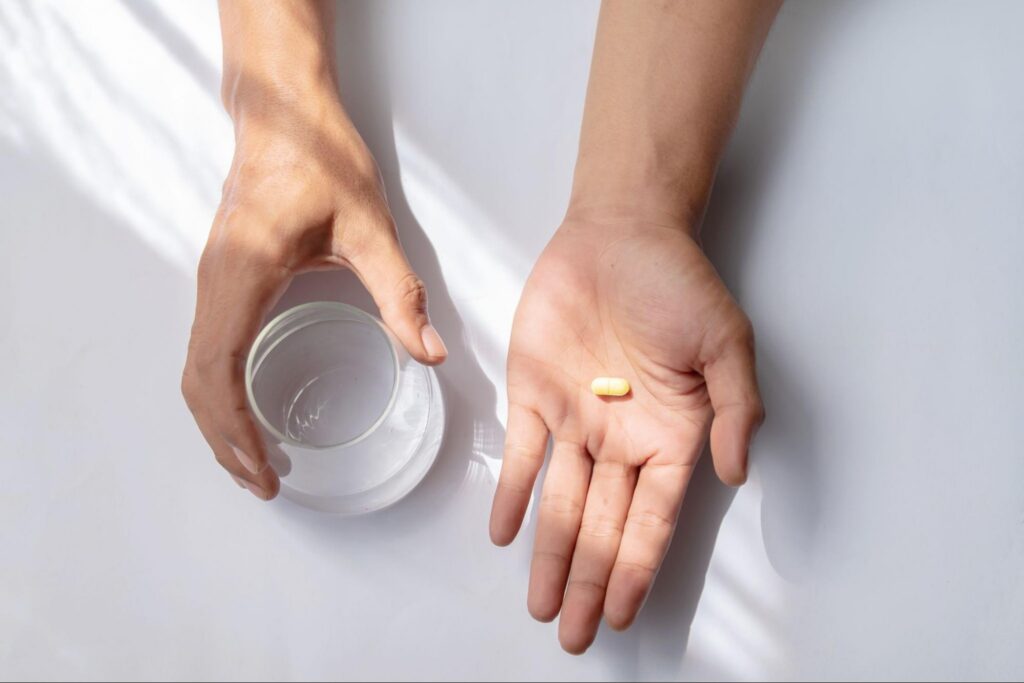
Biocidin Capsules may be convenient for people who prefer a premeasured serving. The current label directs users to begin with one capsule daily and gradually increase to one capsule twice daily, or to follow a healthcare professional’s instructions (²).
Biocidin LSF is marketed as a rapidly absorbed liposomal option. The liquid form offers the most dosing flexibility (³).
Biocidin Gummies offer another option for people who prefer a chewable format. Current manufacturer directions recommend beginning with half a gummy or one gummy and gradually increasing to two gummies daily, unless a healthcare professional provides different instructions (⁴).
Each form has its own label. Doses should not be converted across Biocidin LSF, liquid, capsules, gummies, throat spray, or oral-care products without checking current manufacturer guidance. Product selection depends on tolerance and clinical goals.
Age and Condition-Specific Recommendations
Adults should follow the current label or their clinician’s instructions. Current public product labels do not provide pediatric dosing, so children should use Biocidin only under the guidance of a qualified healthcare professional.
A gummy format should not automatically be interpreted as a children’s product. The current label says to keep Biocidin Gummies out of reach of children, and use in children should be discussed with a qualified healthcare professional.
Patients should not adjust the amount solely according to symptom intensity or a self-diagnosed condition. More is not necessarily better, especially with a multi-ingredient botanical supplement.
Tips for Maximizing Benefits
Use Biocidin for a defined reason, introduce it separately from other new supplements when possible, and track the dose with any symptom changes. A clinician can then assess tolerance and determine if the plan should continue, change, or stop.
Nutrition, sleep, and stress regulation can be addressed alongside supplementation to support digestive resilience and root-cause care.
Potential Side Effects of Biocidin
Biocidin is generally introduced gradually to support tolerance. Possible reactions include gastrointestinal discomfort or sensitivity to one of its botanical ingredients, although reliable frequency data are limited. New nausea, bowel changes, rash, swelling, breathing difficulty, severe pain, or worsening symptoms should not be dismissed as a sign that the product is working.
The formula contains black walnut. Garlic and white willow bark may be relevant to bleeding risk, while goldenseal is particularly relevant to medication interactions. Goldenseal can change how the body processes medicines and has been shown to reduce metformin exposure (⁷). Garlic supplements may increase bleeding risk, particularly with anticoagulants or aspirin and around surgery (⁸).
What Is a Die-Off Reaction?
The term “die-off” is often used online for headaches, chills, body aches, fatigue, or digestive symptoms that appear after starting an antimicrobial supplement. Those symptoms do not confirm that unwanted organisms are dying or that the supplement is working.
A true Jarisch–Herxheimer reaction is an acute inflammatory response classically associated with antibiotic treatment of certain spirochetal infections. It should not be used as a general explanation for every symptom flare after starting Biocidin (⁹).
Anyone who develops new or worsening symptoms should contact a healthcare provider. Severe allergic symptoms, breathing difficulty, fainting, or intense pain require prompt medical care.
Who Should Use Caution?
The manufacturer does not recommend Biocidin during pregnancy and advises people who are nursing to consult a physician (1). NCCIH separately advises that breastfeeding women should not use goldenseal, an ingredient in Biocidin (⁷). People taking medication, preparing for surgery, or managing a medical condition should also seek professional guidance before use.
Extra caution is appropriate for people taking blood thinners, aspirin, diabetes medication, or other drugs with a narrow therapeutic range. Because the formula is proprietary and contains many active botanicals, a full medication and supplement review is more useful than checking only one or two ingredients.
Embracing Biocidin for Better Health
Biocidin can be a valuable targeted tool in personalized digestive care, especially when testing and clinical history point toward microbial imbalance.
Its greatest value may come as part of a broader plan that also addresses digestion, motility, nutrition, sleep, and stress. Monitoring symptoms and tolerance allows the care team to adjust the plan and support the beneficial microbes we want to preserve.

How hol+ Approaches Gut Health and Microbial Balance
At hol+, Biocidin and other functional medicine supplements are considered within a doctor-led evaluation. The aim is to identify why digestive symptoms are occurring and select support that fits the patient’s biology, health history, and current needs.
Root Cause Investigation
The process begins with a detailed symptom and health-history review. Testing may be used when it can clarify the picture, including breath testing for suspected SIBO or other digestive evaluation based on clinical need.
This approach helps distinguish a possible microbial pattern from other sources of bloating, pain, fatigue, or irregular bowel habits.
Personalized Treatment Planning
When appropriate, Biocidin may be one part of a plan addressing nutrition, digestive function, and motility. The plan should define its purpose and when the response will be reassessed.
For patients who are a good fit, this structure helps Biocidin serve a clear purpose within the gut-health protocol and gives the care team a practical way to evaluate progress.
Whole-Person Health Framework
Digestive symptoms can interact with immune activity, hormone signaling, metabolism, and nervous-system regulation. hol+ evaluates these connections without assuming that every whole-body symptom begins in the gut.
By considering gut health within the wider human health operating system, clinicians can look for patterns that may be maintaining symptoms and build a more complete path forward.
FAQs
What is Biocidin, and what is it used for?
Biocidin is a proprietary botanical supplement made from plant extracts and essential oils. Clinicians may use it to support microbial balance and digestive health within a personalized plan. Published research is beginning to explore applications in SIBO and microbial biofilms.
Does Biocidin treat SIBO?
One small human study found encouraging breath-test results for certain SIBO subtypes when Biocidin was used within a multi-supplement protocol. Because participants took it with another supplement and some later added a third product, the study cannot isolate Biocidin’s effect (5).
Is Biocidin a biofilm disruptor?
A 2026 laboratory study found that concentrated Biocidin reduced viable organisms within several established bacterial and fungal biofilms. This demonstrates anti-biofilm activity under controlled conditions, but the study did not establish that Biocidin physically dismantles the biofilm matrix or produces the same effects at standard oral doses (6). Further clinical research is needed.
Can Biocidin cause side effects or a die-off reaction?
Biocidin may cause gastrointestinal discomfort, intolerance, or an allergic reaction, although reliable frequency data are not available. Symptoms described as “die-off” do not prove the supplement is working. A true Jarisch–Herxheimer reaction is primarily associated with antibiotic treatment of certain infections rather than routine supplement use (9).
Who should not take Biocidin?
The manufacturer does not recommend Biocidin during pregnancy and advises people who are nursing to consult a physician (1). Because Biocidin contains goldenseal, the NCCIH warning against using goldenseal while breastfeeding is also relevant (⁷). People taking medications, preparing for surgery, or managing a medical condition should seek clinician guidance. Biocidin is unsuitable for anyone with a relevant walnut or botanical allergy.
How should Biocidin be taken?
Follow the current label for the specific product or instructions from a healthcare professional. Biocidin LSF, liquid, capsules, gummies, throat spray, and oral-care products have different serving directions and should not be treated as interchangeable.