


Many women assume the transition into perimenopause is a distant bridge they will only cross in their mid-to-late 40s (or maybe even later). This leaves many feeling entirely unprepared when their bodies begin to signal shifts much earlier. For an increasing number of women, the subtle, and sometimes disruptive, signs of perimenopause can begin to surface in your 30s.
Unfortunately, because of these entrenched timelines, early perimenopause symptoms are frequently dismissed, misdiagnosed, or treated as isolated issues. A doctor might prescribe a sleep aid for insomnia, a medication for anxiety, or suggest that changes in your cycle are just a normal variation of aging.
At hol+, we understand that experiencing perimenopause before 40 is a systems-level hormone shift. And factors like stress, metabolism, thyroid function, and lifestyle all heavily influence the timing and severity of this transition.
In root cause medicine, the question is not just “Are my hormones changing?” Rather, we ask, “What is driving those changes at a system level?” By exploring your whole-person health, we can uncover why these shifts are happening and how to restore harmony to your body no matter what stage of life you’re in.
Learn more about our approach to perimenopause and menopause>>
What Is Perimenopause – And Can It Really Start Before 40?
Perimenopause, the transitional phase before menopause, is characterized by fluctuating – not just declining – hormones, and it can last for several years before menstruation fully stops.
While it typically begins in a woman’s mid-to-late 40s, it is entirely possible for it to start earlier (1). When it does, it is not always a sign of ovarian “failure.” Early menopause symptoms or early perimenopause are often influenced by chronic stress physiology, metabolic dysregulation, thyroid function changes, and environmental inputs (2,3).
Related: What to Expect During Perimenopause
The Hormone Physiology Behind Early Perimenopause
To truly empower your wellness journey, it is helpful to understand the intricate physiology governing your body. Hormone imbalance in a woman’s 30s usually involves a complex dance between multiple interconnected systems.
Estrogen and Progesterone Imbalance
During a healthy menstrual cycle, estrogen and progesterone rise and fall in a predictable rhythm. In early perimenopause, progesterone often declines first. Meanwhile, estrogen may fluctuate wildly rather than remaining consistently low. This estrogen progesterone imbalance creates irregular signaling patterns, leading to many of the unpredictable symptoms women experience during this time.
HPA Axis and Cortisol Influence
The Hypothalamic-Pituitary-Adrenal (HPA) axis controls your body’s stress response. Chronic stress alters hormone signaling. When your body is under constant stress, it produces higher levels of cortisol. Stress and metabolism are tightly linked, and this chronic demand can deeply disrupt your hormonal harmony (4).
Thyroid and Metabolic Interactions
Your thyroid acts as the master regulator of your metabolism. Thyroid function directly influences cycle regularity. Furthermore, your metabolic health impacts how hormones are produced and cleared from the body. Hormone imbalance is rarely isolated – it reflects cross-system communication. Suboptimal thyroid and perimenopause symptoms often overlap, showing why an integrative approach is essential (2).
Related: Is It Perimenopause or a Thyroid Problem?
Early Signs of Perimenopause Most Doctors Miss
Because traditional medical models often look for standard markers of aging, the early signs of perimenopause are easily overlooked. Understanding these patterns is key to early and effective support.
- Cycle Changes – Slightly shorter or longer cycles. You may experience heavier or lighter bleeding than usual. An increase in premenstrual syndrome (PMS) symptoms is also a common early warning sign of irregular cycle causes.
- Mood and Cognitive Changes – Newfound anxiety or irritability. You might struggle with brain fog or notice a significantly reduced stress tolerance.
- Sleep Disruption – You may have difficulty staying asleep or find yourself waking up unusually early. Non-restorative sleep, where you wake up feeling unrefreshed despite spending enough hours in bed, is a frequent complaint.
- Energy and Metabolic Shifts – Severe afternoon energy crashes or increased sugar cravings. Many women notice weight resistance, where they struggle to maintain their weight despite consistent diet and exercise habits.
- Physical Symptoms – Breast tenderness, an increase in headaches or migraines, and early hot flashes or temperature sensitivity are common.
Symptoms often appear well before obvious cycle irregularity, which is why paying attention to these early whispers is so crucial.
Listen: The Perimenopause Symptoms No One Warned You About with Dr. Dr. Mariza Snyder
Why Early Perimenopause Is Often Misdiagnosed
If these symptoms are so prevalent, why are they so frequently missed? The answer lies in how traditional healthcare evaluates patient complaints.
- Treating Symptoms Individually
In a conventional setting, many clinicians report a lack of understanding and treatment of menopause (5). Because of that, mood changes may quickly be labeled as anxiety or depression and treated with psychiatric medications. Fatigue could simply be attributed to a busy lifestyle. And cycle changes are dismissed as “normal variation.” This fragmented view fails to connect the dots and see symptoms as connected to one another.
- Overlooking Whole-Body Causes
Perimenopause symptoms are highly variable from woman to woman, and can also mimic other conditions (6). Many practitioners lack the training to perform comprehensive hormone pattern analysis. There is often minimal evaluation of stress physiology, metabolic health, and thyroid function in relation to reproductive health.
- Lab Limitations
Standard blood tests often rely on single data point in hormone labs, which can easily appear “normal” depending on the day they are drawn. Hormone fluctuations are missed because the testing is static. When viewed through a systems-based lens, these symptoms form a pattern rather than a snapshot of isolated issues.
Read: 5 Causes of Early Menopause
The Systems-Based Drivers of Early Perimenopause
Root cause hormone imbalance requires us to look at the entire human ecosystem. Early perimenopause is often a reflection of system-level stress rather than isolated reproductive decline.
Stress Physiology
Chronic cortisol output disrupts ovulation and reduces progesterone production (7). This constant state of high alert also contributes to nervous system dysregulation, making it difficult for the body to find safety and balance.
Metabolic Health
Your metabolic health is a foundational pillar of hormone harmony. Insulin resistance impacts ovarian signaling, while blood sugar instability amplifies hormone fluctuations. Addressing metabolic health is often a necessary first step in resolving early perimenopausal symptoms.
Thyroid Function
Subclinical thyroid changes alter cycle patterns (8). Even small shifts in thyroid health can impact energy production and reproductive signaling.
Gut Health and Detoxification
Estrogen metabolism occurs primarily in the gut and liver. If your gut microbiome is imbalanced or your liver is overburdened, your body struggles to eliminate excess hormones (9). These imbalances can lead to estrogen dominance patterns, worsening symptoms like breast tenderness and heavy bleeding.
Environmental Load
We are exposed to numerous endocrine-disrupting chemicals (EDCs) in our daily lives through plastics, personal care products, and household cleaners. EDCs can speed reproductive aging, leading to an earlier onset of perimenopause and menopause. Exposure to chemicals like phthalates, PCBs, and PFAS can cause women to reach menopause approximately 2 to 2.5 years earlier (10).
Read: Hormone Balancing + Detox Diet
When Early Perimenopause Affects Fertility
For women in their 30s, the possibility of early perimenopause often brings immediate concerns about family planning. Fertility and hormone balance are naturally deeply intertwined.
During early perimenopause, ovulation still occurs – but it often happens inconsistently. Egg quality is heavily influenced by mitochondrial health and metabolic status (11). Hormonal variability can significantly impact conception timing and the necessary pregnancy support required during the first trimester.
This phase does not necessarily eliminate fertility, but it does change the physiological landscape. With personalized health empowerment and expert guidance, many women successfully navigate these changes to achieve their family goals.
Related: Can You Slow Hormonal Aging Naturally? How to Delay Perimenopause
The Root Cause Medicine Approach to Early Perimenopause
At hol+, we merge the best of Eastern and Western medicine to provide system-level health care. Our approach relies on understanding the unique context of your life and biology.
Structured Evaluation
We begin with a detailed menstrual and symptom history. We conduct extensive stress and lifestyle mapping, alongside a thorough sleep and recovery assessment. We want to know your story, your daily demands, and how your body responds to them.
Advanced Diagnostics
To uncover the root cause, we utilize advanced diagnostics. This may include:
- Hormone pattern testing (tracking hormones over an entire cycle, not just a single point)
- Cortisol rhythm evaluation
- Comprehensive thyroid panels
- Metabolic markers
- Nutrient status testing
Schedule a free, 15-minute consultation to get to the bottom of fluctuating hormone symptoms>>
Restoring Hormone Balance Through System-Level Care
Our goal is coherence not interference – restoring proper signaling rather than just suppressing your symptoms with quick fixes.
Nervous System Regulation
Healing requires safety and balance. We implement stress reduction strategies and focus heavily on sleep optimization. By restoring parasympathetic balance, we help heal nervous system dysregulation, allowing your body to shift out of survival mode and back into repair.
Metabolic Stabilization
We focus on blood sugar regulation through nutrient-dense dietary strategies. Proper protein intake and tailored micronutrient support help stabilize the metabolic foundation required for healthy hormone production (12).
Read: Balance Blood Sugar to Breeze Through Perimenopause
Hormone Support
We create personalized, physiology-based plans. When appropriate, we utilize holistic approaches to support ovulation and natural progesterone production, easing the transition and minimizing severe fluctuations.
Gut and Detox Support
A healthy gut is essential for whole-body health. We provide protocols supporting estrogen metabolism and reducing your overall inflammatory burden.
Lifestyle and Environmental Alignment
We guide you in reducing endocrine disruptor exposure in your daily life. Furthermore, we help you align your physical activity with your current recovery capacity, ensuring your lifestyle supports rather than depletes your energy reserves.
Reframing Early Perimenopause
Experiencing perimenopause before 40 is not uncommon, and it is certainly not a reason to lose hope. These symptoms are often early signals – not isolated problems. Hormone changes reflect broader system dynamics, and by addressing the root causes, you can drastically improve your symptom trajectory.
Want to learn more? Schedule a FREE 15 minute consultation
Schedule Your Consultation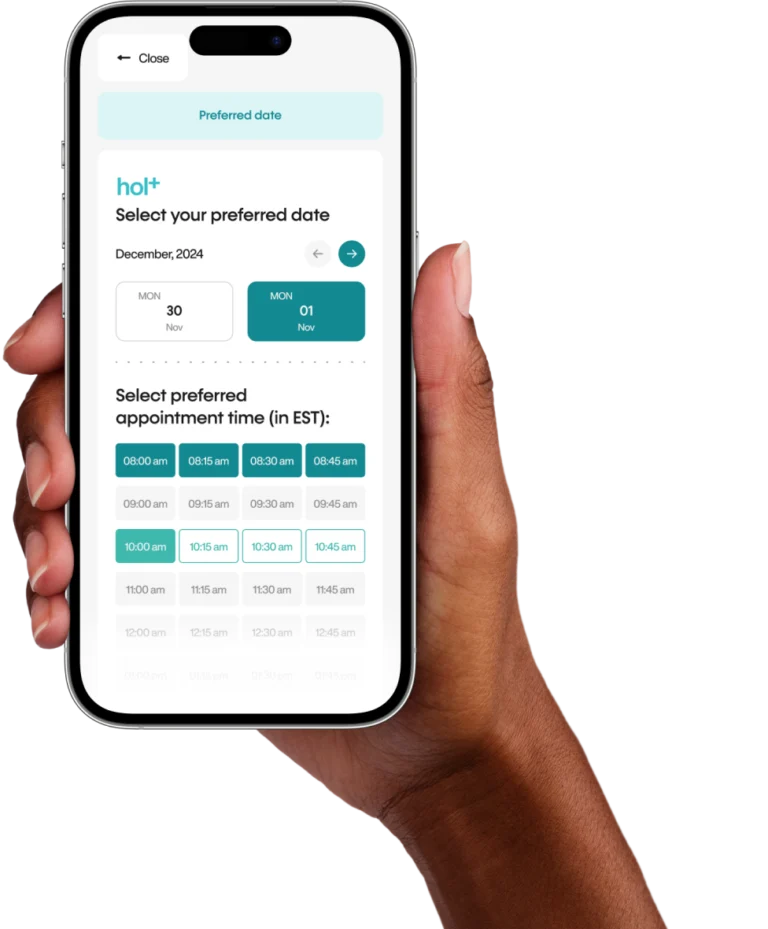
At hol+, hormone health is evaluated within the full human health operating system. We ensure care plans address the underlying drivers of change, not just the symptoms that surface. You deserve a healthcare experience that listens attentively, treats you with compassion, and empowers you to reclaim your vitality. Where science meets tradition, true healing begins.