
The hol+ Peptide Protocol
Four layers of readiness before the first peptide
Peptides are precise biological signals. But like any signal, they require a receiver capable of responding. Our four-layer protocol systematically prepares your body to make the most of every peptide we prescribe — starting with the foundations that conventional peptide providers skip entirely.
Book a 15 Min Consultation
What is Peptide Therapy?
Peptides are short chains of amino acids, the same building blocks that make up proteins, that act as precise biological signaling molecules within the body. Naturally produced and used by virtually every system, from immune regulation to cellular repair, these compounds direct how your cells communicate, respond, and recover. As we age or experience chronic stress, peptide production declines, and those signals begin to break down.
But they are not one-size-fits-all.
And they are not meant to work alone.
Peptide therapy is the clinical application of targeted peptide sequences to restore or enhance that signaling. Delivered most commonly through peptide injections or subcutaneous administration, peptide treatment works by binding to specific receptors and triggering precise physiological responses, whether that means accelerating tissue repair, modulating inflammation, optimizing hormonal output, or supporting metabolic function.
Within functional medicine, peptides are not applied in isolation. Functional medicine peptides are most effective when prescribed within a broader clinical framework — one that accounts for your unique biochemistry, receptor sensitivity, and biological readiness. Outcomes depend not just on the compound, but on the context in which it is used.
Benefits of Peptide Therapy
The clinical value of peptide therapy lies in its precision. Rather than broadly stimulating or suppressing biological systems, peptide treatment works within your body's existing architecture, reinforcing the signaling pathways that govern repair, regulation, and resilience. When applied within a functional medicine framework, the benefits of peptide therapy are system-wide and interconnected.





These benefits are most reliably achieved when peptide therapy is part of a comprehensive, diagnostics-driven protocol — the foundation of care at hol+.
Book a 15 Min Consultation
Gut → Hormones → Inflammation → Micronutrients → Peptides
The hol+ Peptide Therapy Framework
The gut is the origin of systemic health — and the first site of peptide absorption. Leaky gut, dysbiosis, and intestinal inflammation not only impair how peptides enter the body, they create the inflammatory terrain that undermines their action downstream. We test and treat the gut before anything else.
Key interventions: GI-MAP testing, leaky gut repair protocol (L-glutamine, zinc carnosine, colostrum), elimination of food triggers, probiotic and prebiotic optimization, BPC-157 oral as a gut-healing entry point.
Research: BPC-157 was first identified as a naturally occurring protective compound in gastric juice. Its primary mechanism is gut mucosal healing — stimulating growth of the intestinal lining and modulating inflammatory cytokines. (Sikiric et al., Current Pharmaceutical Design)
Growth hormone, cortisol, thyroid hormones, estrogen, and testosterone all directly interact with peptide signaling pathways. A patient with suboptimal thyroid function will have blunted response to CJC-1295/Ipamorelin — no matter how well-formulated the peptide. We map and optimize the hormonal terrain first.
Key interventions: Comprehensive hormone panel, thyroid optimization (T3/T4/rT3), sex hormone balancing, cortisol rhythm testing, adrenal support, insulin sensitivity protocols, and HPA axis mapping.
Research: CJC-1295 and Ipamorelin work by stimulating pulsatile growth hormone release from the pituitary — but this axis is profoundly sensitive to cortisol burden, thyroid status, and sex hormone levels.
Chronic microinflammation — our cornerstone clinical concept at hol+ — is the single most common reason peptide therapies underperform. It blocks receptor sensitivity, impairs cellular repair, and creates a biochemical environment hostile to regeneration. We identify and resolve it systematically before adding peptide load.
Key interventions: Advanced inflammatory panel (hsCRP, IL-6, TNF-alpha, homocysteine), food sensitivity testing, environmental toxin load, targeted anti-inflammatory support (omega-3, curcumin, resveratrol, NAC), and Cortisol Loop mapping.
Research: TB-500 specifically suppresses pro-inflammatory cytokines and promotes anti-inflammatory tissue remodeling. Its efficacy is greatest in low-inflammation environments. (Nature Reviews Endocrinology)
Peptides are catalysts — but catalysts require cofactors. Zinc, magnesium, B vitamins, vitamin D, and key amino acids are essential substrates for the repair and regeneration processes peptides initiate. A deficient patient is running peptide therapy on empty. We test and replete before and during every protocol.
Key interventions: Full micronutrient panel, targeted IV nutrient therapy, precision supplementation stack, amino acid profiling (for tissue-repair peptides), and ongoing monitoring.
Research: GHK-Cu requires adequate copper bioavailability to function — its mechanism depends on copper-dependent enzyme systems for collagen synthesis and angiogenesis. Many patients have sub-optimal copper, zinc, and B-vitamin status. (Pickart et al., Biomolecules, 2015)
This reinforces:
root cause medicine
system-level health
functional medicine approach
PEPTIDE FORMULARY
Our Full Peptide Library, Explained
Gut Healing · Anti-Inflammatory
BPC-157
Body Protection Compound-157 · Oral or Injectable
Derived from a naturally occurring protective protein in gastric juice, BPC-157 is one of the most studied healing peptides in regenerative medicine. It promotes repair of gut mucosa, tendons, ligaments, and nerve tissue while powerfully modulating inflammatory pathways. Our most commonly prescribed peptide — and often the starting point for every protocol.
Research: BPC-157 has demonstrated acceleration of tendon healing and tissue regeneration in animal models (Journal of Orthopaedic Research, PubMed 21030672).
Gut · Skin · Anti-Inflammatory
KPV
Alpha-MSH Tripeptide · Oral or Topical
A tripeptide derived from alpha-melanocyte stimulating hormone (alpha-MSH), KPV is a potent anti-inflammatory agent with a particular affinity for the gut and skin. It directly inhibits nuclear factor kappa B (NF-κB), one of the master regulators of inflammatory signaling.
Research: KPV reduces colonic inflammation via NF-κB suppression and direct receptor action on intestinal epithelial cells. (Gastroenterology, Dalmasso et al., 2008)
Tissue Regeneration · Healing
TB-500
Thymosin Beta-4 Analog · Injectable
A synthetic analog of the naturally occurring thymosin beta-4 protein, TB-500 promotes cell migration, angiogenesis (new blood vessel formation), and cytoskeletal reorganization — driving systemic tissue repair across muscles, tendons, ligaments, and the cardiovascular system.
Research: Thymosin beta-4 promotes cell migration, new vessel formation, and tissue remodeling. Significantly accelerates recovery from soft tissue injury. (Goldstein & Kleinman, Ann NY Acad Sci, 2015)
Immune Modulation · Longevity
Thymosin Alpha-1
Tα1 · Subcutaneous Injectable
A 28-amino acid peptide derived from thymosin fraction 5, Thymosin Alpha-1 is one of the most clinically studied immunomodulatory peptides in medicine. It enhances T-cell function, natural killer cell activity, and dendritic cell maturation.
Research: FDA-approved in some international markets (Zadaxin) for hepatitis B and C. Over 60 published clinical trials documenting immune modulation and T-cell enhancement.
Skin · Collagen · Anti-Aging
GHK-Cu
Copper Peptide · Topical or Injectable
One of the most researched skin-rejuvenating peptides, GHK-Cu stimulates collagen and elastin synthesis, promotes angiogenesis, activates wound healing pathways, and powerfully regulates gene expression related to inflammation and repair. Naturally occurring in human plasma, it declines with age.
Research: GHK-Cu stimulates synthesis of collagen, dermatan sulfate, and decorin. Gene activation studies show it up-regulates 31 genes related to wound healing. (Pickart et al., Biomolecules, 2015)
Cellular Energy · Longevity
NAD+
Nicotinamide Adenine Dinucleotide · IV, IM, or Subcutaneous
NAD+ is the fundamental coenzyme for cellular energy production, DNA repair, and mitochondrial health — making it the essential substrate for every regenerative peptide protocol we run. NAD+ declines by approximately 50% between ages 40 and 60. Replenishment is foundational.
Research: NAD+ supplementation activates sirtuins and PARP enzymes involved in DNA repair and longevity signaling. IV delivery shows significant benefit.
Growth Hormone Axis · Body Composition
CJC-1295 + Ipamorelin
GHRH Analog + GHRP · Subcutaneous Injectable
The gold standard combination for stimulating endogenous growth hormone release. CJC-1295 extends the half-life of natural GH pulses; Ipamorelin is a selective growth hormone secretagogue that amplifies pulsatile GH release without elevating cortisol or prolactin.
Research: CJC-1295 has been shown to increase plasma GH levels 2–10x in dose-dependent fashion. Ipamorelin selectivity avoids cortisol and ghrelin side effects. (Teichman et al., JCEM, 2006)
Mitochondria · Metabolism · Longevity
MOTS-C
Mitochondrial-Derived Peptide · Subcutaneous Injectable
MOTS-C is a mitochondrial-derived peptide encoded in mitochondrial DNA. It activates AMPK, the master metabolic switch, enhancing insulin sensitivity, glucose utilization, and mitochondrial biogenesis. Considered one of the most promising longevity peptides in research today.
Research: MOTS-C supplementation in aging mice restored metabolic fitness and physical capacity to levels seen in young mice, mediated through AMPK activation. (Lee et al., Cell Metabolism, 2015)
Fat Metabolism · Body Composition
AOD-9604
Anti-Obesity Drug Fragment 176-191 · Subcutaneous Injectable
A modified fragment of human growth hormone (amino acids 176-191), AOD-9604 specifically targets fat metabolism — stimulating lipolysis and inhibiting lipogenesis without the blood sugar effects of full-length hGH.
Research: AOD-9604 demonstrated fat mass reduction without glucose or insulin changes in obese rodents. FDA GRAS designation obtained. Multiple Phase II clinical trials conducted.
Visceral Fat · GH Axis · Metabolic
Tessamorelin
Stabilized GHRH Analog · Subcutaneous Injectable
Tessamorelin is a stabilized growth hormone releasing hormone (GHRH) analog with the strongest clinical evidence base of any GHRH peptide — including FDA approval for HIV-associated lipodystrophy. It specifically targets visceral adipose tissue.
Research: FDA-approved (Egrifta) for reduction of excess abdominal fat in HIV-lipodystrophy. Randomized trials demonstrate significant visceral fat reduction. (Falutz et al., NEJM, 2007)
Injectable · Targeted Repair
Injectable BPC-157
BPC-157 Subcutaneous or IM · Targeted Injection
While oral BPC-157 is highly effective for gut and systemic healing, injectable BPC-157 — administered subcutaneously near an injury site or intramuscularly — provides concentrated local action for musculoskeletal repair, joint healing, nerve regeneration, and post-surgical recovery.
Research: Subcutaneous BPC-157 administered near injury sites significantly accelerated tendon-to-bone healing and collagen organization. (Chang et al., Acta Pharmacol Sin, 2011)
Not sure where to start?
Schedule your free 15-minute consultation and we'll help you find the right path.
Schedule a 15 Minute Consultation ➞
MEDICATION OPTIONS
What Peptide Therapy Can Support
Peptide therapy is not a single-condition treatment. Because peptides operate at the level of cellular signaling, their clinical applications span multiple systems, making them a versatile tool within a functional medicine protocol. Below are the areas where peptide treatment is most commonly used in clinical practice.
Gut Health and Microbiome Imbalance
Certain peptides are being studied for their role in supporting intestinal lining integrity and reducing gut permeability, making them relevant to patients with chronic digestive dysfunction.
Injury Recovery and Tissue Repair
Some of the most clinically studied peptides are used in musculoskeletal recovery, supporting connective tissue, tendon, and muscle repair at the cellular level.
Metabolic Health and Weight Regulation
Peptides for weight loss and metabolic support work by influencing energy regulation, insulin sensitivity, and fat metabolism, rather than suppressing appetite in isolation.
Skin and Collagen Health
Collagen-stimulating peptide sequences are applied both systemically and topically in clinical settings, supporting skin integrity, elasticity, and wound healing.
Chronic Inflammation
Peptide sequences with immune-modulating properties may help regulate dysregulated inflammatory pathways — a foundational application in functional medicine peptide protocols.
Hormone Imbalance
Peptides that act on the hypothalamic-pituitary axis may support upstream hormonal signaling, a meaningful distinction from direct hormone replacement therapy.
Immune Dysregulation
Thymic peptides, in particular, are associated with immune system calibration, supporting patients with chronic immune dysfunction or recurrent illness.
CURATED STACKS
hol+ Signature Peptide Protocols
The Gut Reset Stack
BPC-157 (oral) + KPV + L-Glutamine + Probiotics
Our foundational protocol for anyone with gut permeability, IBD, IBS, chronic bloating, or microbiome dysbiosis. BPC-157 repairs mucosal integrity while KPV directly suppresses intestinal inflammation at the NF-κB level. The essential first step before any other peptide protocol.
The Wolverine Healing Protocol
Injectable BPC-157 + TB-500 + NAD+
For patients with musculoskeletal injuries, post-surgical recovery needs, chronic joint pain, or athletic wear-and-tear. BPC-157 provides local repair signal; TB-500 drives systemic healing; NAD+ powers cellular energy for intensive tissue regeneration. Typical protocol: 4–8 weeks.
The Body Recomposition Stack
CJC-1295/Ipamorelin + AOD-9604 + MOTS-C
Designed for patients focused on body composition: building lean muscle while burning visceral fat. CJC-1295/Ipamorelin optimizes the growth hormone axis; AOD-9604 targets fat metabolism directly; MOTS-C activates AMPK for enhanced insulin sensitivity and mitochondrial efficiency.
The Longevity & Immune Stack
Thymosin Alpha-1 + NAD+ + GHK-Cu + MOTS-C
Our comprehensive longevity protocol combining immune optimization, cellular energy, skin regeneration, and mitochondrial health. Thymosin Alpha-1 restores immune surveillance; NAD+ addresses cellular aging; GHK-Cu reverses age-related tissue decline; MOTS-C targets metabolic hallmarks of aging.
The Hormonal Reset + Peptide Stack
Tessamorelin + CJC-1295/Ipamorelin + Hormone Optimization
For patients with documented growth hormone deficiency, significant visceral adiposity, or post-menopausal metabolic shift. Tessamorelin (with the strongest clinical evidence base of any GHRH peptide) is combined with the CJC/Ipamorelin stack and layered onto our full hormone optimization protocol.
GLP-1 + Peptide Metabolic Stack
Semaglutide/Tirzepatide + BPC-157 + AOD-9604 + NAD+
Our most comprehensive metabolic protocol — combining a GLP-1 receptor agonist with targeted peptides that address what GLP-1 medications cannot. BPC-157 heals GI side effects; AOD-9604 accelerates fat metabolism; NAD+ powers cellular energy. For patients on GLP-1 therapy who want maximum results.
Not sure where to start?
Schedule your free 15-minute consultation and we'll help you find the right path.
Schedule a 15 Minute Consultation ➞
Who May Benefit From Peptide Therapy?
Peptide therapy is not universally indicated — and at hol+, it is never prescribed without a thorough diagnostic workup. That said, certain clinical profiles consistently present as strong candidates:
- Chronic inflammation — Patients with persistently elevated inflammatory markers who have not responded to dietary or lifestyle intervention alone, supported by protocols like The Gut Reset Stack or The Longevity & Immune Stack.
- Metabolic dysfunction — Individuals with insulin resistance, visceral adiposity, or body composition challenges, addressed through The Body Recomposition Stack or GLP-1 + Peptide Metabolic Stack.
- Injury and surgical recovery — Patients requiring accelerated tissue and musculoskeletal repair, as addressed in The Wolverine Healing Protocol.
- Hormone-related symptoms — Fatigue, body composition shifts, or documented growth hormone decline, supported through The Hormonal Reset + Peptide Stack.
- Longevity and prevention — Individuals committed to optimizing healthspan at the cellular level, not just managing acute symptoms.
The hol+ Approach
Discover. Recover. Heal.
Created by Dr. Taz MD, Power RX® integrates multiple systems of medicine to account for the whole person, not just symptoms.
From aging to autoimmune diseases, menopause to ADHD — Power RX® finds solutions by combining the wisdom of Ayurveda, Chinese medicine, and energy medicine with conventional Western medicine.
Discover
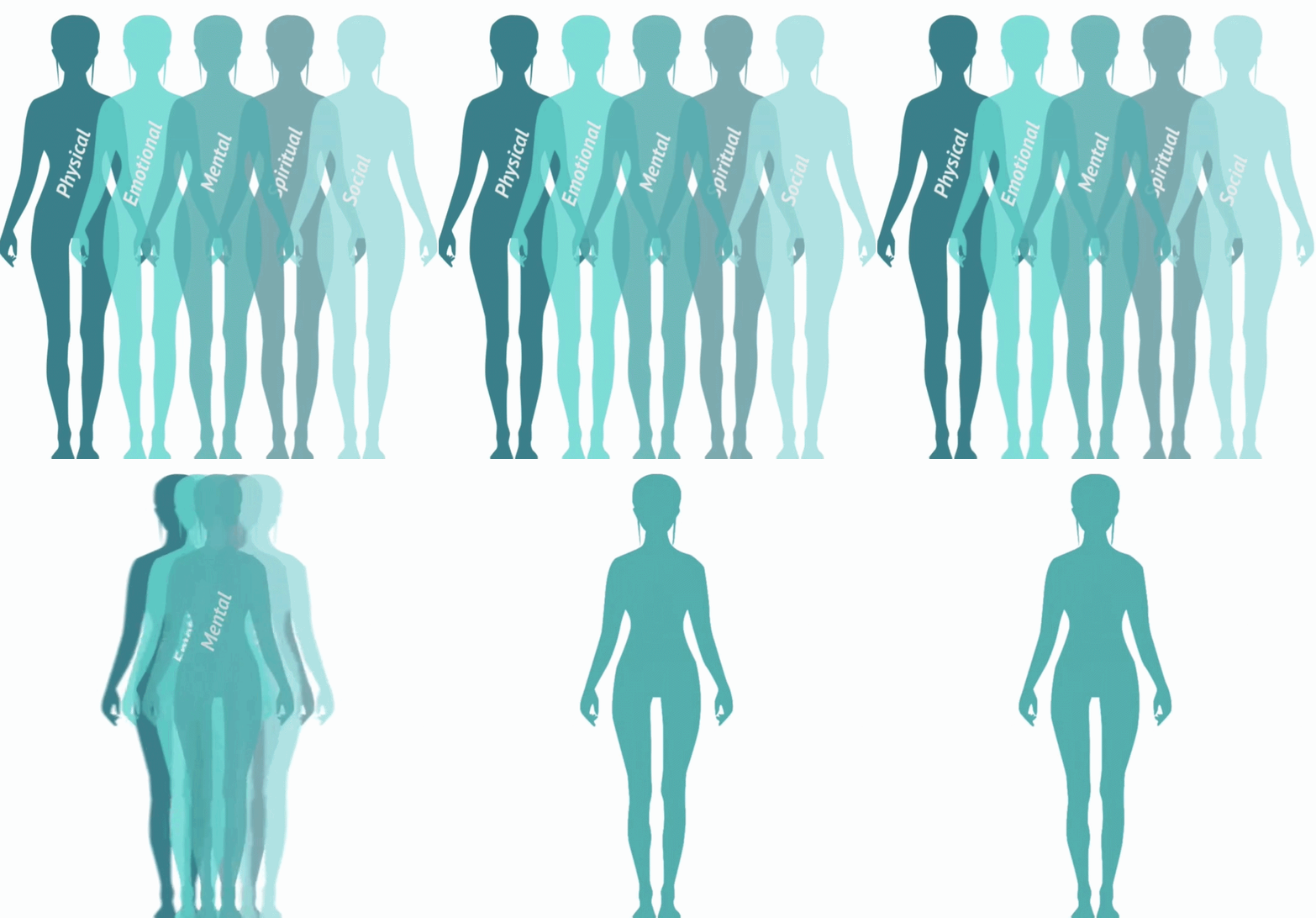
Uncover root causes through the 10 pillars across all 5 bodies.
In the Discover phase, we use the 10 pillars as a diagnostic lens — mapping imbalances across your physical, emotional, mental, spiritual, and social bodies to uncover the root causes conventional medicine often misses.
Recover
Restore balance with a protocol tailored to your unique chemistry.
In the Recover phase, we build your personalized protocol — targeting the specific pillars and body systems that need restoration. Whether it's gut health affecting your emotional body, or oxidative stress draining your physical body, every recommendation is designed to bring your unique chemistry back into balance.
Heal
Achieve lasting vitality as all five dimensions align and thrive.
Finally, in the Heal phase, the interconnected nature of the 5 Bodies comes full circle. As each pillar strengthens, the ripple effect across all five dimensions creates lasting vitality — not just the absence of disease, but true empowerment and wholeness.
Book a 15 Min Consultation
Peptide Therapy vs Traditional Treatments
How Peptide Therapy Fits Into Modern Medicine
Peptide therapy is not a rejection of conventional medicine. It is a precision layer added to it.
Where traditional treatments are often designed to manage symptoms or suppress a dysregulated response, functional medicine peptides are designed to restore the signaling that drives the body's own regulatory capacity. The distinction is not philosophical — it is mechanistic.
Conventional Approach
Peptide Therapy
Mechanism
Suppresses, replaces, or blocks (i.e., NSAIDs reduce inflammation by inhibiting COX enzymes)
Signals and restores. Works upstream to modulate the pathways driving dysfunction
Target
Symptom or isolated biomarker
Biological system and root signaling environment
Hormone Support
Direct hormone replacement (i.e., HRT introduces exogenous hormones)
Stimulates the body’s own hormonal signaling axis to encourage endogenous production
Metabolic Health
GLP-1 medications suppress appetite and regulate glucose in isolation
Peptide treatment addresses fat metabolism, cellular energy, and GI integrity concurrently
Integration
Often used as a standalone intervention
Designed to layer onto and enhance existing treatment protocols
Not sure where to start?
Schedule your free 15-minute consultation and we'll help you find the right path.
Schedule a 15 Minute Consultation ➞
At hol+, peptide therapy is prescribed as part of an integrated clinical model — not as a replacement for medications that are clinically indicated, but as a systems-level complement that addresses what conventional treatment alone frequently cannot: the upstream signaling environment driving chronic dysfunction.
What to Expect as a Patient
The hol+ Clinical Process
A structured clinical process helps patients understand their health patterns and develop a personalized strategy.
Holistic and functional medicine operate from a different framework than traditional symptom-driven care. Rather than addressing health concerns in isolation, systems-based medicine evaluates how multiple physiological systems interact.
The human body functions as an integrated network. Hormonal signaling influences metabolism. Gut health affects immune function. Stress physiology alters inflammation, sleep, and metabolic balance. When one system becomes dysregulated, ripple effects can appear across many others.
Functional medicine focuses on identifying the system-level drivers behind symptoms. At hol+, clinicians evaluate health through a lens that distinguishes signal from static. Symptoms are viewed as signals that reflect deeper physiological patterns.
To understand these patterns, the clinical team may assess:
Hormone health and endocrine signaling
Metabolic function and energy regulation
Stress physiology and nervous system balance
Nutrient status and metabolic cofactors
Environmental exposures that influence immune or metabolic function
This framework reflects what hol+ refers to as the human health operating system—the network of biological processes that coordinate energy, immunity, and recovery. When this system operates in balance, the body can maintain resilience. When disruptions accumulate, symptoms may begin to appear.
Through systems-based medicine, a holistic doctor in Atlanta can evaluate these interconnected processes and identify where intervention may support improved function.
Full health history, goals, prior treatments, and a complete root-cause lab panel including gut, hormones, inflammation, and micronutrients.
Using our proprietary framework, we map every system — Stress Engine, Processing System, Rhythm System, Defense System, Power System — to identify your specific readiness and gaps.
4–8 weeks of targeted gut healing, hormone optimization, inflammation resolution, and micronutrient repletion — preparing your body for maximum peptide response.
Introduction of your curated peptide protocol with precise dosing, delivery instructions, and bi-weekly physician check-ins for response monitoring and adjustment.
Quarterly lab reassessment, protocol evolution, and long-term integration into your hol+ membership — because regenerative medicine is a journey, not a course.
Not sure where to start?
Schedule your free 15-minute consultation and we'll help you find the right path.
Schedule a 15 Minute Consultation ➞
Are peptides safe?
Safety and Physician Oversight
Peptide therapy is similar to any clinical intervention; individual responses vary. Without proper evaluation and monitoring, outcomes can fall short or produce unintended effects. At hol+, physician-led oversight is the foundation of every protocol.
Every peptide treatment plan begins with a comprehensive diagnostic workup, including:
- IGF-1 levels — to establish baseline growth hormone axis function
- Inflammatory panels — to quantify systemic inflammatory burden
- Metabolic markers — to assess insulin sensitivity, lipid profiles, and energy regulation
- Hormone profiles — to contextualize peptide therapy within the broader endocrine picture
Dosing is determined by this data. Labs are repeated at clinically appropriate intervals throughout the protocol to assess response and drive any necessary adjustments. No protocol at hol+ is static.
hol+ holds its peptide therapy protocols to the same standard of clinical rigor as any evidence-based functional medicine intervention — because precision without oversight is not precision at all.
Why hol+ is Different
Rather than isolating individual concerns, the hol+ model focuses on root cause medicine and whole-person health. Clinical evaluation centers on how different biological systems communicate and influence one another over time.
Many patients seek out functional medicine after experiencing care that addressed symptoms without fully resolving underlying patterns. At hol+, health is evaluated through a broader lens—considering metabolism, hormone signaling, gut function, stress physiology, and environmental inputs as part of a connected system.
The focus remains on understanding the underlying systems shaping health — not simply managing symptoms.
Book a 15 Min Consultation