

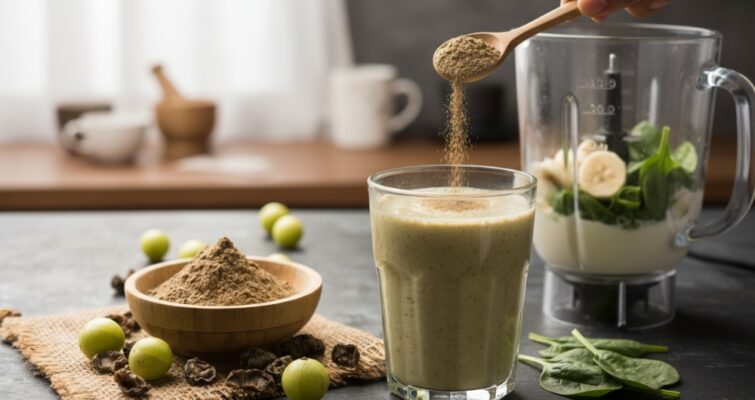
Amla has been used for centuries in Ayurvedic medicine—and it’s gaining serious attention for good reason. If you’ve been wondering how to use amla powder to support energy, digestion, skin health, or immunity, you’re not alone. This tart, vitamin C–rich superberry is one of those ingredients that’s small in size but huge in impact.
Amla supports so many systems at once, but to really get the benefits, how you use it matters. The form, the timing, even what you take it with, all influence how your body absorbs and uses it. Whether you’re new to functional remedies or looking to deepen your routine, understanding how to work with amla powder can take your wellness to the next level.
Amla: The Ancient Superberry You Should Know About
Amla (also called Indian gooseberry) may look humble, but its strength lies in its complexity. In Ayurveda, amla is known as a Rasayana, a class of herbs used for longevity, resilience, and deep tissue nourishment. It’s considered tridoshic—which means it supports all body types—making it a rare and deeply balancing plant ally.
This tiny green fruit holds one of the highest natural concentrations of vitamin C, but that’s only part of the story. Its real magic comes from a synergy of polyphenols, tannins, and antioxidants that nourish the body across multiple systems. Amla works gently but consistently, which is why it’s been relied on for thousands of years to build strength from the inside out.
Traditional Uses of Amla
For centuries, amla has been used in everyday rituals and seasonal cleanses. It’s one of those ingredients that supports both acute concerns and long-term health.
- Supports digestion and nutrient absorption
- Promotes skin clarity and radiance
- Encourages healthy hair growth and scalp balance
- Boosts overall vitality and longevity
Modern Research, Ancient Roots
Today, research confirms what Ayurvedic texts have long said—amla plays a major role in functional wellness. It’s been shown to support:
- Blood sugar balance and insulin sensitivity
- Immune resilience, especially during cold and flu seasons
- Heart health, by supporting cholesterol and antioxidant status
Because it works on multiple levels, amla is often used in functional medicine protocols to gently rebalance the body while supporting detox, skin health, hormone balance, and energy.
How Amla Supports Immunity, Metabolism, and More
Amla powder isn’t just a “natural vitamin C.” It’s a whole-body tonic that supports foundational systems like the gut, metabolism, skin, and immune defense, all through a food-based, bioavailable source. This kind of gentle, comprehensive support is exactly what functional medicine is built on. When your systems work in harmony, everything from your energy to your hormones starts to regulate more naturally. Amla helps the body do just that.
Immune System Support
Amla’s high vitamin C content is one of the first things people notice—and for good reason. This isn’t isolated ascorbic acid; it’s a full-spectrum form buffered with natural tannins and polyphenols, which enhance antioxidant activity without overstimulating the system.
- Naturally supports the body’s response to seasonal stressors
- Helps regulate inflammation
- Buffers oxidative stress in tissues, which supports cellular repair
- Nourishes lymphatic flow and mucous membrane integrity
It’s especially helpful when you’re feeling depleted or in recovery mode, like post-illness, after travel, or during busy, burnout-prone seasons.
Blood Sugar & Metabolic Health
Functional medicine focuses heavily on blood sugar balance. When glucose and insulin levels swing, everything from mood to hormones to inflammation gets impacted. Amla powder has been shown to help flatten post-meal blood sugar spikes and support insulin sensitivity over time.
It does this through its polyphenol content, which slows carbohydrate breakdown and supports healthy metabolic signaling. This makes amla an easy add-on for anyone looking to reduce sugar cravings, boost energy stability, or support weight balance.
Gut and Digestive Health
In Ayurveda, amla is often used as a digestive tonic—cooling, nourishing, and mildly astringent. In functional terms, it helps tone the gut lining, regulate bowel movements, and promote healthy microbiome balance.
It’s particularly helpful for:
- Supporting regularity without harsh laxatives
- Reducing bloating related to sluggish digestion
- Creating a gut environment that supports nutrient absorption
- Promoting microbial diversity through polyphenol content
If you’re working on restoring gut function after antibiotics, illness, or chronic inflammation, amla can be a gentle daily ally.
Skin, Hair & Hormonal Health
This is where amla shines as a true inside-out supplement. Its antioxidant density protects collagen, supports skin hydration, and enhances elasticity. It also plays a role in balancing oxidative stress, which affects hormone signaling and skin clarity.
Amla has a long-standing traditional use in hair oils and tonics for supporting growth, shine, and natural pigmentation, especially when used alongside scalp massage or internally in powder or capsule form.
Its nutrient density and stress-modulating properties may also help support hormonal balance through adrenal resilience and improved nutrient absorption—especially during perimenopause, postpartum, or other times of hormonal transition.
hol+ — Functional Support that Starts with You
At hol+, we believe functional medicine starts with knowing what your body is really asking for. Amla is a perfect example of how one gentle, nutrient-rich herb can support deep healing across multiple systems when used intentionally.
Our approach blends advanced diagnostic testing with evidence-based integrative care, so your plan isn’t just “natural”—it’s precise, personalized, and made to evolve with you. Whether we’re supporting your hormones, digestion, energy, or detox pathways, we meet you where you are and build from there.
Curious how amla—or any functional tool—fits into your health journey? Schedule a consultation with us today. We’ll help you uncover the root causes and create a plan that works for your body, your rhythm, and your goals.
How to Use Amla Powder Effectively
If you’ve ever opened a pouch of amla powder and paused—wondering how much, how often, or what do I even do with this?—you’re not alone. The beauty of amla is that it’s versatile and forgiving. The key is to make it part of a rhythm you actually enjoy. Once you find your favorite form, it becomes less of a “supplement” and more of a steady wellness ritual.
Daily Use Guidelines
A little goes a long way. You don’t need to mega-dose to feel the effects. Amla works best when used consistently over time, like many adaptogenic herbs.
- Use ½ to 1 teaspoon daily (about 1–3 grams)
- Best absorbed when taken on an empty stomach or between meals
- Mix with warm water, herbal tea, or lemon water
- Blend into smoothies with other antioxidant-rich ingredients
Culinary Uses
If the taste feels too tart or earthy on its own, fold it into your favorite foods. Amla’s slightly sour flavor actually pairs well with both sweet and savory elements.
- Stir into green juice, chia pudding, or overnight oats
- Add to a spoonful of yogurt or coconut milk
- Make an Ayurvedic tonic with turmeric, ginger, cinnamon, and raw honey
- Include in herbal blends or DIY teas alongside triphala, ashwagandha, or tulsi
Topical Uses
You can also use amla externally as part of your skin or scalp routine. In Ayurveda, amla is known for strengthening follicles, supporting hair growth, and calming inflammation.
- Mix with coconut or sesame oil for a nourishing scalp mask
- Combine with rose water, honey, or aloe vera for a cooling face mask
- Leave on for 15–20 minutes, rinse, and follow with your usual routine
- Use weekly for visible shine, texture improvement, and skin clarity
The Key Is Consistency
Whether you’re adding it to your tea or turning it into a mask, using amla powder effectively is about creating space for the habit to settle in. You might start with just a few grams a week, then build up as your body adjusts. Some people notice changes in digestion and energy within a couple of weeks, others feel it more gradually, like a quiet baseline of vitality that keeps building.
Amla Powder: Safe Use, Smart Timing
Amla is deeply nourishing, but like anything that interacts with your biochemistry, it deserves a little respect and mindfulness. Most people tolerate amla well—especially in food-based amounts—but if you’re adding it regularly as a supplement, there are a few things to keep in mind.
If your body is sensitive, or you’re already on medication (especially for blood sugar), it’s always smart to start slowly and notice how your body responds.
Start Gently and Build
When adding anything new, your body does best when you ease it in. Amla can be quite potent in its raw powder form.
- Start with ¼ to ½ teaspoon daily, especially if you’re new to herbal support
- Gradually increase to a full teaspoon or more, depending on your needs
- Always observe how your digestion, energy, and skin respond over the first 1–2 weeks
Medication Interactions
Because amla powder can support healthy blood sugar levels, it can intensify the effects of blood sugar–lowering medications like insulin or metformin. If you’re taking these, be sure to keep an eye on your levels and loop in your provider.
The same goes for those on blood thinners, as amla contains vitamin C and certain tannins that may influence clotting in rare cases.
Avoiding Overuse
More isn’t always better—especially with concentrated powders. Very high doses of amla might lead to loose stools, cramping, or a “cleansing” effect that feels a little too intense. It’s a reminder that your liver and gut are responding, but if it feels off, it’s okay to back down.
Amla is best used consistently and moderately over time, especially when combined with grounding foods, hydration, and rest.
Honor Your Body’s Signals
Your body is wise. Amla works beautifully when it’s integrated thoughtfully, without rushing or forcing results. If something feels off, pause and reflect. If it feels energizing, brightening, or gently clarifying—that’s your green light.
Botanical Wisdom Meets Functional Medicine at hol+
At hol+, we believe real healing begins when your care is tailored to you. That means understanding your body’s patterns, identifying the root causes of imbalance, and then supporting you with tools that are gentle, targeted, and deeply effective. Botanicals like amla aren’t just an add-on for us—they’re a meaningful part of a bigger picture. We pair ancient plants with modern diagnostics to guide every recommendation with intention.
Whether you’re here to improve digestion, balance hormones, or support skin, energy, and detox, we use botanical medicine with the same precision as any other clinical tool. Here’s how we make it work for you:
Nutrient & Hormone Testing
Before we reach for a supplement, we get a clear look at what your body’s asking for. We use advanced testing to measure:
- Inflammation markers
- Oxidative stress
- Hormone balance (including estrogen, progesterone, cortisol, thyroid)
- Nutrient status (like vitamin C, zinc, B12, and folate)
This helps us see where amla—or another botanical—might best support you.
Customized Nutrition Counseling
Once we understand your body’s story, we craft a real-life plan that fits your goals and your lifestyle. We often use amla alongside other functional ingredients—like turmeric, ginger, adaptogens, and micronutrient-dense foods—to help improve:
- Metabolism and insulin sensitivity
- Digestive regularity
- Skin clarity and collagen support
- Hormone rhythm and stress resilience
Integrative Therapies
Botanicals work even better when the whole system is supported. At hol+, we often combine herbal support with:
- Ayurveda to address constitution and digestion
- Acupuncture to stimulate energy flow and organ function
- Functional medicine to restore systems like the gut-liver axis and immune signaling
Everything is designed to work together, your protocol becomes a rhythm that supports your nervous system, hormones, and energy from the inside out.
Safe Supplement Guidance
We don’t guess. Every botanical we recommend is chosen with care, guided by clinical data and your personal health picture. Whether it’s amla, ashwagandha, or something more niche, we tailor the form, dose, and timing to your body’s needs. Some botanicals are best taken as powders or teas, others work better in capsules or tinctures. We consider how your body metabolizes them, what time of day they’re most effective, and how they interact with any medications or supplements you’re already taking. It’s plant medicine, elevated through precision.
The Next Step Toward Balance
When it comes to how to use amla powder, the real magic lies in understanding your body and choosing a form that fits your lifestyle and goals. From supporting immunity and digestion to improving skin, hair, and hormone balance, amla is a botanical powerhouse—especially when used intentionally and consistently. It’s not just about adding it to your routine, but using it in a way your body actually responds to.
At hol+, we bring together advanced testing, nutrition strategy, and integrative medicine to guide you step by step. Whether you’re new to herbal support or ready to deepen your approach, we’re here to make your care personal, data-informed, and deeply supportive. Book your consultation today and let’s create a plan that truly fits you.
FAQs
What’s the best time of day to take amla powder?
Amla powder can be taken in the morning on an empty stomach to support digestion and immunity, or at night if you’re focused on skin, detox, or calming inflammation. It depends on what you’re using it for, so listen to your body and how it responds. A warm tea or tonic can be a beautiful way to make it a daily ritual.
How to use amla powder for hair health?
You can use amla powder both internally and topically for hair support. Internally, it nourishes from within by supporting nutrient absorption and circulation. Topically, mix it with coconut oil, aloe, or water into a paste and massage into the scalp before rinsing. It’s rich in antioxidants and vitamin C, which help with growth and scalp balance.
Is amla powder safe to use every day?
In general, yes—daily use of amla powder is considered safe in moderate amounts (1–3 grams/day). If you’re pregnant, on medications, or have low blood sugar, it’s best to check with a provider first. Like any botanical, it’s powerful, and consistency matters more than high doses.
How to use amla powder to support immunity?
To support immune health, take amla powder with warm water or herbal tea in the morning. Its high vitamin C content and polyphenols help build resilience against daily stressors and oxidative damage. Pair it with a colorful, nutrient-rich diet for even stronger results.
How do you decide if amla is right for me at hol+?
We use functional testing to look at nutrient levels, oxidative stress, hormone balance, and digestion. If we see signs your body would benefit from antioxidant support or inflammation regulation, we may incorporate amla. Every recommendation is based on your unique health picture.
Can you combine amla with other botanicals in my plan?
Absolutely. We often use amla alongside herbs like turmeric, ashwagandha, or adaptogens to build synergy. We make sure combinations are supportive, not overwhelming—every plant we use plays a role in your bigger wellness picture.